One of the most common interior design questions we hear in summer: how do you manage afternoon glare without making your home feel dark and closed-off? Here's how we think about it.
Every June, the same thing happens. The sun shifts angle, the afternoons get longer, and suddenly the room that felt perfectly comfortable in April is flooded with glare. The couch is too hot to sit on. The television is impossible to see. And someone is squinting at the kitchen table. It's one of the most common interior design challenges of summer — and one of the most solvable.
The instinct is to block it all out — pull down the shades, hang heavier curtains, and declare victory. But this approach trades one problem for another. Many clients come to me after having done exactly that, only to find that the room now feels dark and closed-off even at noon on a sunny day.
The real goal is control, not elimination. Thoughtful window treatments can filter and diffuse summer light in ways that make a room feel cool and comfortable without sacrificing the brightness and connection to the outside that makes summer living so enjoyable in the first place.
Here's how I think about it.
1. Understand What's Actually Bothering You
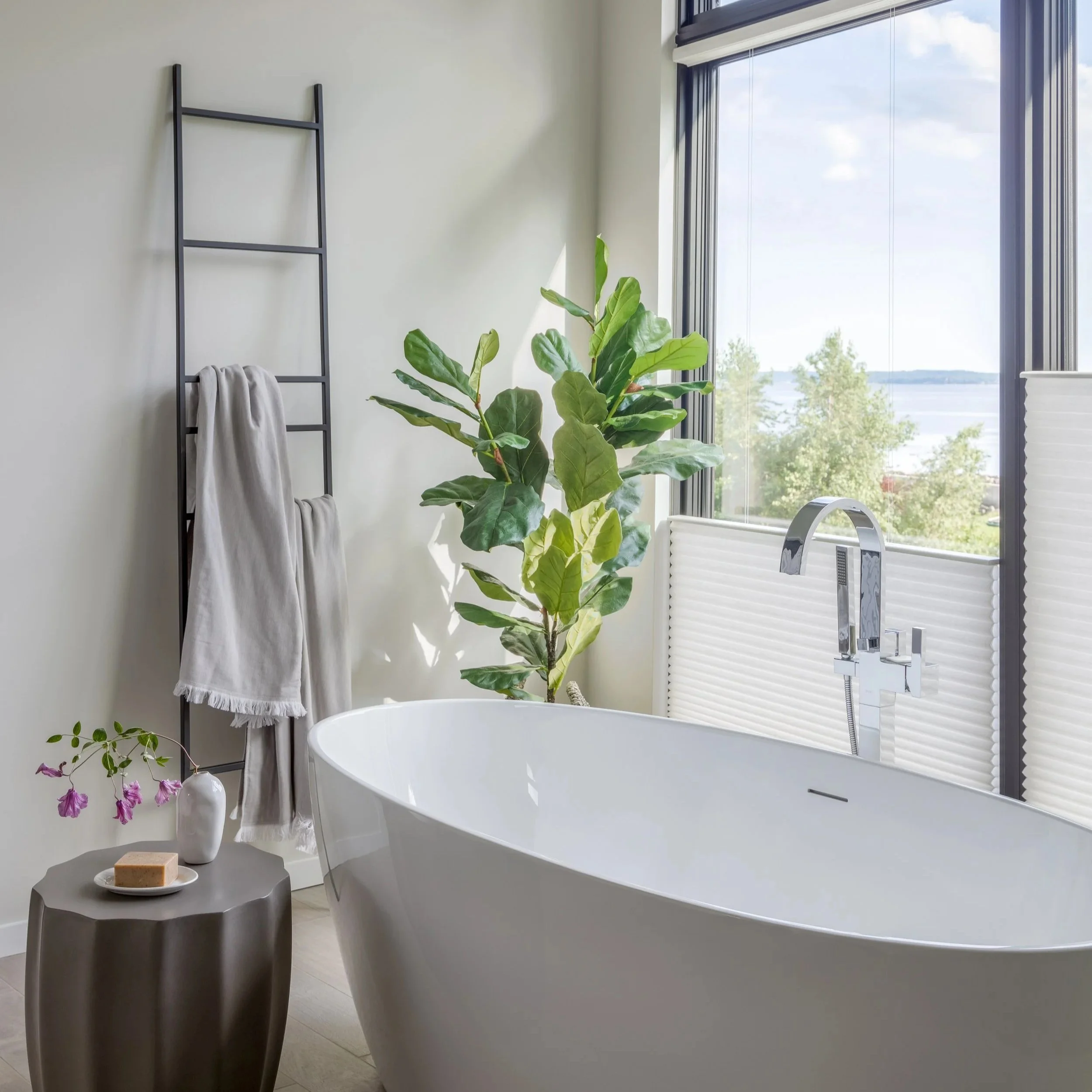
Design by HHS Interior Design, 📸 Kyle Caldwell
Before choosing a treatment, it helps to name the specific problem. Glare, heat, and privacy are three distinct issues, and the solution for each is different.
What's happening:
Glare is a contrast problem — light hitting a reflective surface (a screen, a glass table, a glossy floor) at a sharp angle. It's uncomfortable and fatiguing.
Heat gain happens when solar radiation passes through glass and warms the room. It can raise temperatures significantly, especially in south- and west-facing rooms.
Privacy is a visibility issue — it peaks at night, when interior lighting makes you visible from outside, not during the day when ambient exterior light is brighter.
What this means in practice:
If glare is your issue, you may not need to block all light — just diffuse it. If heat is the problem, you need a treatment that reflects solar energy rather than absorbing it. If privacy is the concern, the solution depends on the time of day more than the shade density.
2. Solar Shades Are Often the Answer (But Choose the Right Openness Factor)
Solar shades are one of the most versatile tools for summer light management. They're woven from a mesh fabric that filters light and reduces glare without fully blocking the view or plunging the room into darkness.
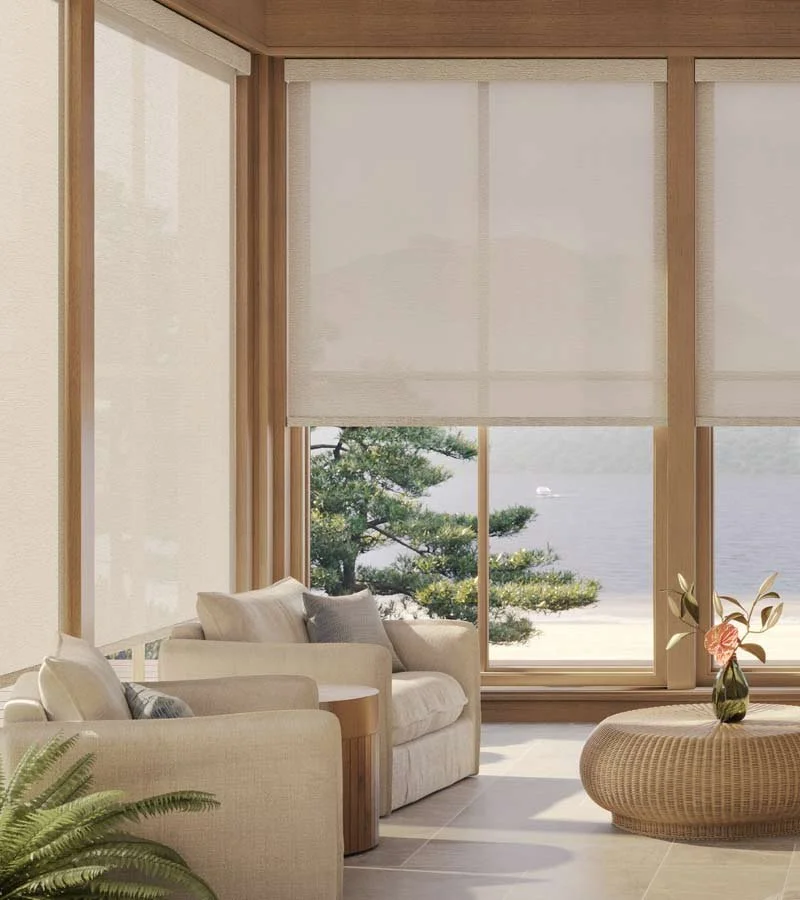
Image courtesy of Skyline Window Coverings
What's happening:
Solar shades are rated by "openness factor" — typically ranging from 1% (nearly opaque) to 14% (very open)
A 3–5% openness is the sweet spot for most living spaces: it cuts glare significantly while preserving an outward view
Color matters too — lighter shades reflect more heat, while darker shades provide better glare reduction and view-through clarity
What this means in practice:
A light-colored 3% solar shade on a south-facing window can meaningfully reduce heat gain while still letting you see the garden. Paired with a softening linen panel on a side track, it gives you full flexibility — diffused light on ordinary days, more privacy when you want it.
3. Layering Is the Most Flexible Approach
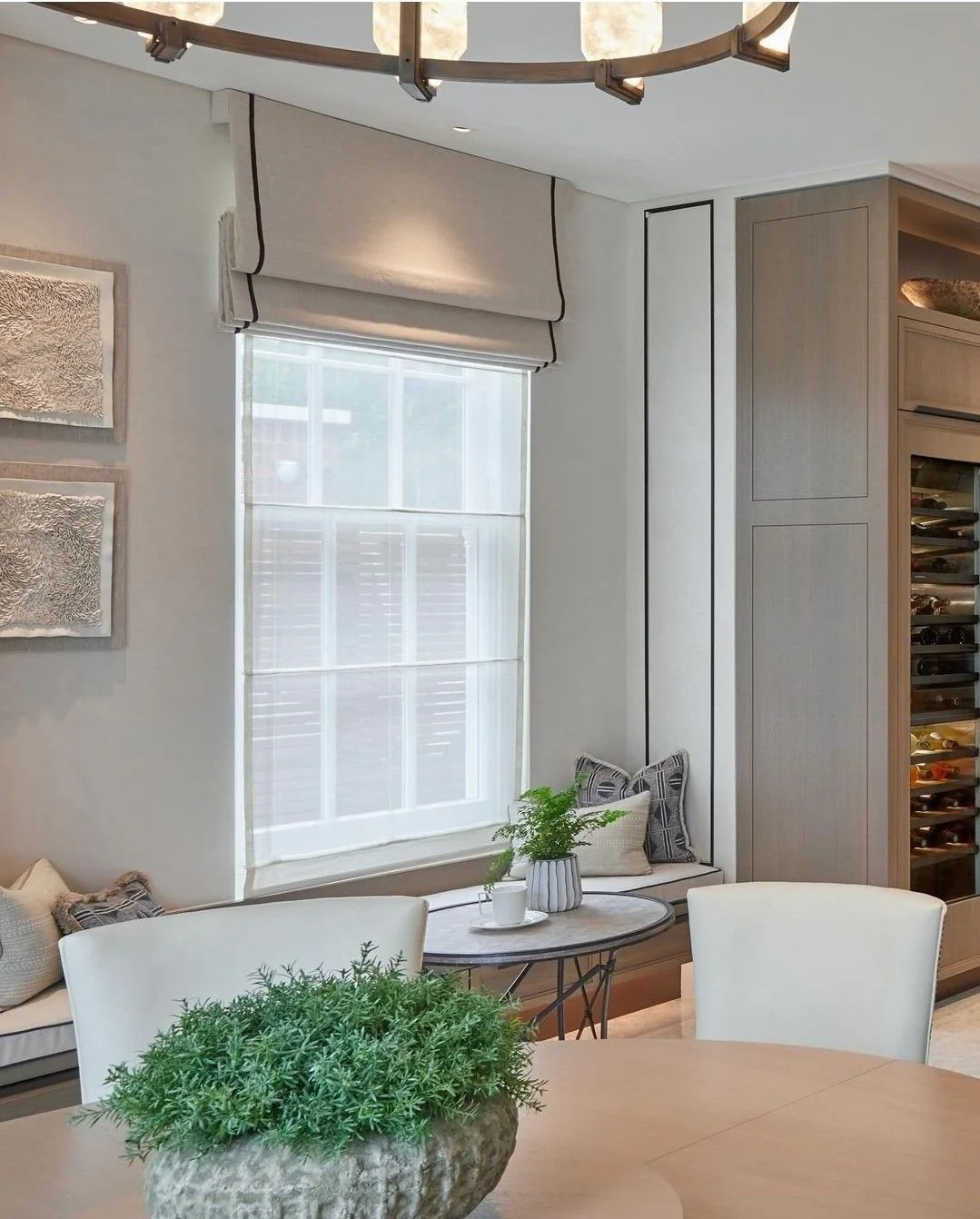
The single-treatment approach — one shade or one curtain — requires you to commit to one mode: open or closed. Layering gives you a range, and it also looks more finished and considered.
What's happening:
A solar or sheer shade handles daytime filtering and glare
A heavier drapery panel — linen, cotton velvet, or a woven blend — layered over the top provides evening privacy and a softer, more furnished look
Mounting both on separate tracks or rods lets you operate them independently
What this means in practice:
During the day, the solar shade is down and the drape is stacked neatly to the side. In the evening, you pull the drape across for privacy and warmth. The result is a window that functions well at every hour and reads as intentionally designed rather than simply covered.
4. Don't Forget the Hardware and the Height
Window treatments are only as good as the way they're installed. This is an area where I see a lot of well-intentioned DIY projects fall short — not because the product is wrong, but because of how it's hung.
What's happening:
Curtains hung at window height (rather than ceiling height) visually truncate the wall and make rooms feel lower
Panels that are too narrow don't fully clear the glass when open, blocking light even when you want it
Hardware that draws the eye for the wrong reasons — too chunky, too flimsy, or mismatched — undermines even beautiful fabric
What this means in practice:
Mount the rod as close to the ceiling as possible and extend the bracket at least 4–6 inches beyond the window frame on each side. This lets the panel stack fully clear of the glass when open, and the high mount gives the room height. For hardware, simple matte metal — brass, black, or bronze — tends to read well across a range of styles without competing with the fabric.
5. When Blackout Makes Sense — and When It Doesn't
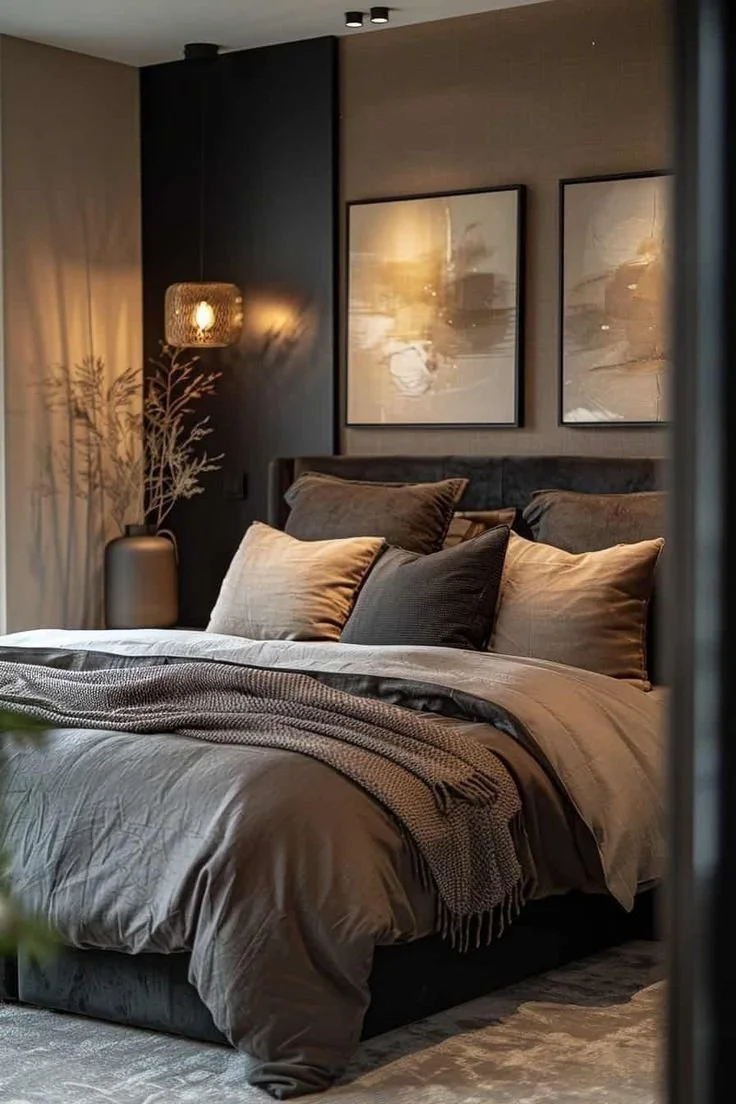
Blackout shades have their place, and I recommend them regularly — just not everywhere. Bedrooms are the obvious candidate, especially in summer when the sun rises early and the goal is to extend sleep past 5:30 AM. Guest rooms, nurseries, and media rooms are also strong cases.
Where blackout shades tend to go wrong is in living areas and kitchens, where clients install them to solve a glare problem and then find themselves living in a room that feels dim and sealed off from the outdoors. In those spaces, the layered approach described above almost always serves better.
The other consideration is aesthetics. Blackout fabrics have improved considerably, but they still tend to have a flatter, more utilitarian look than woven or textured fabrics. In a bedroom where they're rarely seen during the day, this is fine. In a living room, it's worth weighing the trade-off.
Summer light is one of the great pleasures of a well-designed home. These interior design tips for summer are really about one thing: working with the season rather than against it. The right combination of treatments, hardware, and installation will give you flexibility for every time of day and every mood, without sacrificing the brightness that makes summer interiors so appealing in the first place.